
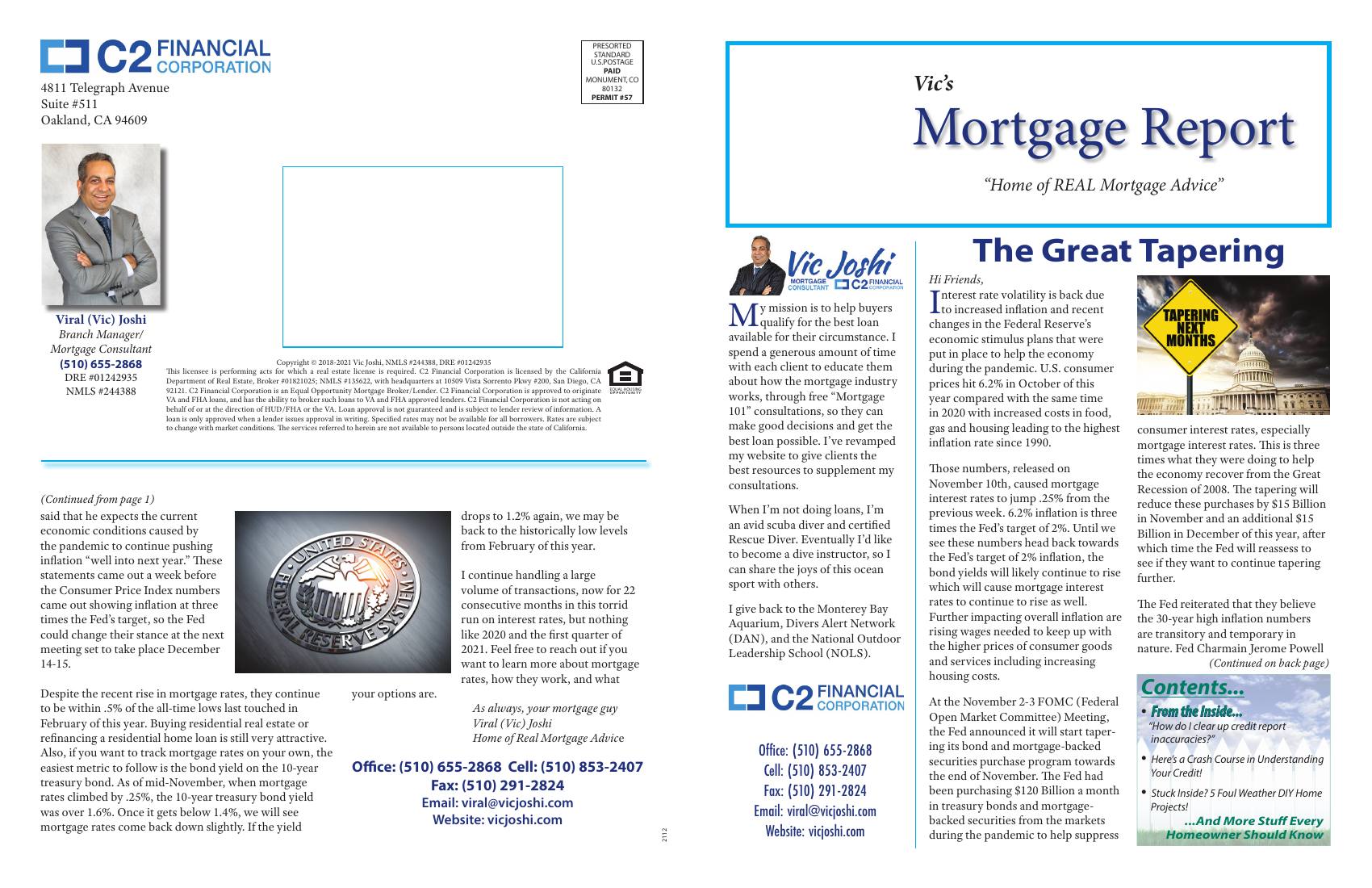
Hi Friends, Interest rate volatility is back due to increased inflation and recent changes in the Federal Reserve’s economic stimulus plans that were put in place to help the economy during the pandemic. U.S. consumer prices hit 6.2% in October of this year compared with the same time in 2020 with increased costs in food, gas and housing leading to the highest inflation rate since 1990.
Those numbers, released on November 10th, caused mortgage interest rates to jump .25% from the previous week. 6.2% inflation is three times the Fed’s target of 2%. Until we see these numbers head back towards the Fed’s target of 2% inflation, the bond yields will likely continue to rise which will cause mortgage interest rates to continue to rise as well. Further impacting overall inflation are rising wages needed to keep up with the higher prices of consumer goods and services including increasing housing costs.
consumer interest rates, especially mortgage interest rates. This is three times what they were doing to help the economy recover from the Great Recession of 2008. The tapering will reduce these purchases by $15 Billion in November and an additional $15 Billion in December of this year, after which time the Fed will reassess to see if they want to continue tapering further.
The Fed reiterated that they believe the 30-year high inflation numbers are transitory and temporary in nature. Fed Charmain Jerome Powell
At the November 2-3 FOMC (Federal Open Market Committee) Meeting, the Fed announced it will start tapering its bond and mortgage-backed securities purchase program towards the end of November. The Fed had been purchasing $120 Billion a month in treasury bonds and mortgagebacked securities from the markets during the pandemic to help suppress
• FFrroomm tthhee IInnssiiddee......
“How do I clear up credit report inaccuracies?” • Here’s a Crash Course in Understanding
Your Credit! • Stuck Inside? 5 Foul Weather DIY Home
...And More Stuff Every Homeowner Should Know
Despite the recent rise in mortgage rates, they continue to be within .5% of the all-time lows last touched in February of this year. Buying residential real estate or refinancing a residential home loan is still very attractive. Also, if you want to track mortgage rates on your own, the easiest metric to follow is the bond yield on the 10-year treasury bond. As of mid-November, when mortgage rates climbed by .25%, the 10-year treasury bond yield was over 1.6%. Once it gets below 1.4%, we will see mortgage rates come back down slightly. If the yield drops to 1.2% again, we may be back to the historically low levels from February of this year.
I continue handling a large volume of transactions, now for 22 consecutive months in this torrid run on interest rates, but nothing like 2020 and the first quarter of 2021. Feel free to reach out if you want to learn more about mortgage rates, how they work, and what your options are.